
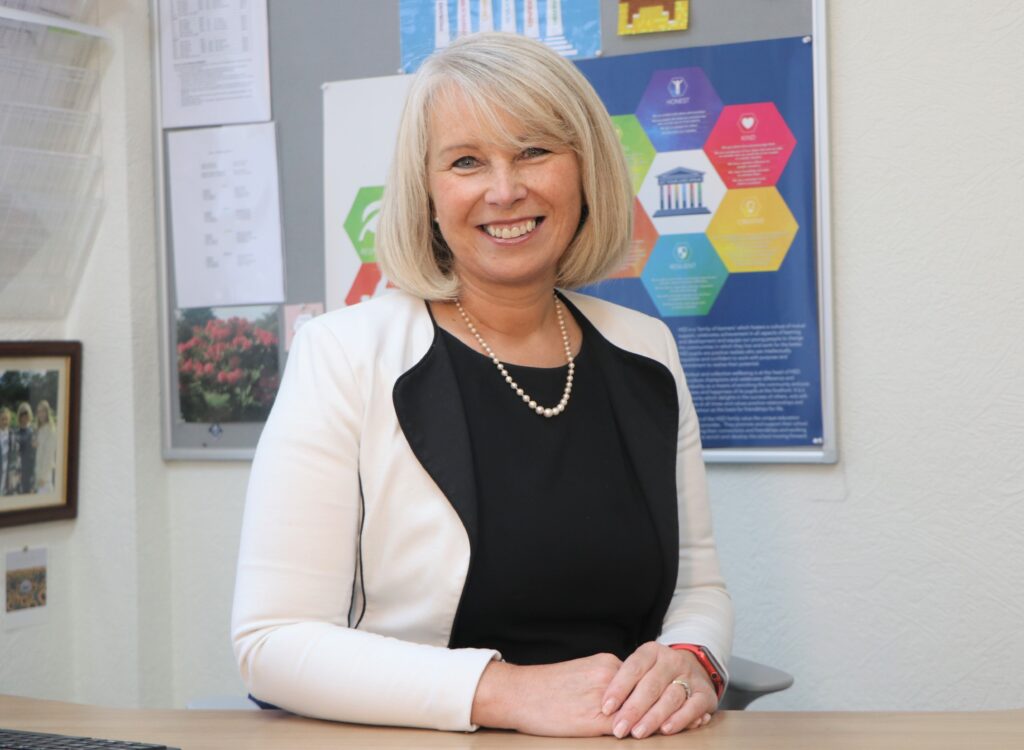
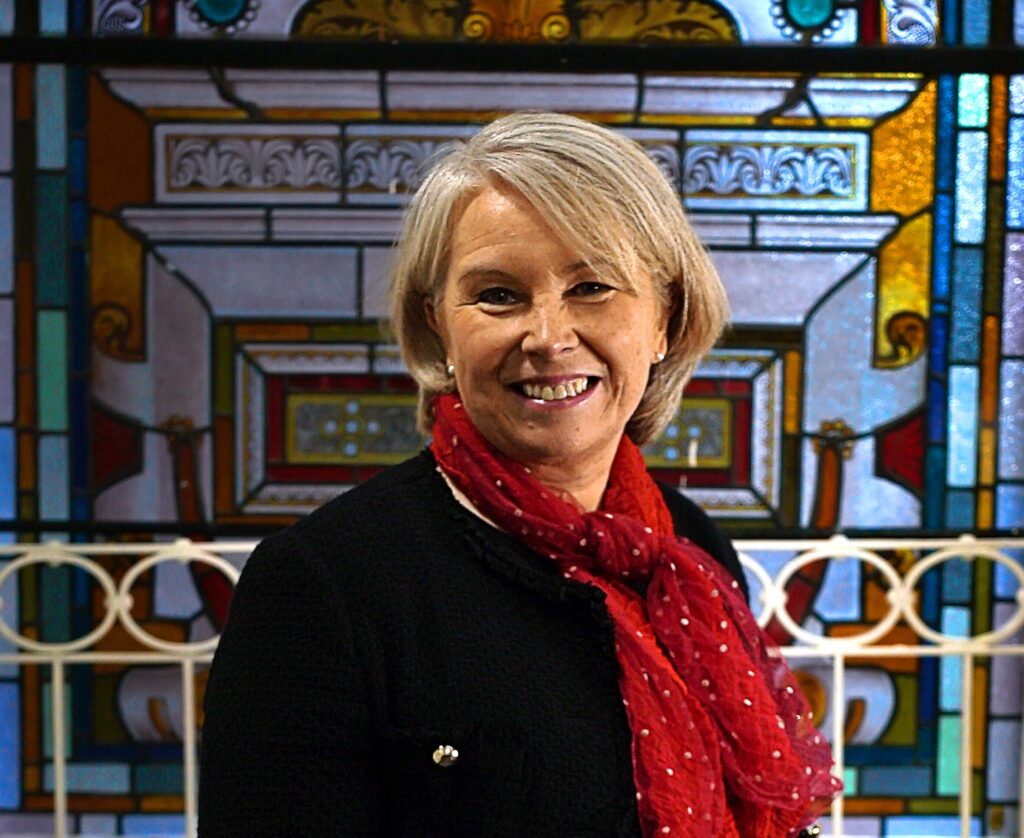
After 36 years at HSD, six of them as Rector, Lise Hudson retires in August. From her early days as a young History Teacher to becoming the School’s first female Rector in its nearly 800-year history, her career has been defined by relationships, values, and a deep commitment to young people.
As she prepared for her final weeks in post, Mrs Hudson reflected on her career, leadership, and what makes HSD such a distinctive place.
LEAVING HSD
How are you feeling about stepping away from HSD?
“With very mixed feelings; which is exactly as it should be.
“This has been my whole working life. I really feel it stopped being somewhere I worked a long time ago and instead became somewhere I belonged. I know the timing is right: the school is stable, looking forwards, and it’s the perfect opportunity for new leadership.
“The new Rector has been appointed, and there’s a real sense of momentum. I’ve always believed that schools, like all institutions, benefit from fresh leadership at the right moment, and this feels like one of those moments. I’m proud of where we’ve got to, and I’m excited for what comes next for the school.
“Personally, however, the separation is going to be profound. Both my daughters have been pupils at the School and HSD is woven so deeply into my personal life as well as my career. So leaving won’t feel like a transition, for me it’s something much larger than that.
“I feel enormously privileged to have been here for as long as I have, and I can’t pretend that leaving is easy.”
Did the teacher who arrived at Euclid Crescent 36 years ago ever imagine she’d become Rector? What motivated you to apply for the role?
“Absolutely not! Although my father always thought I’d be a headmistress; as usual he’s been proved right!
“I arrived as quite a green, shy 23-year-old history teacher, and I didn’t have a grand plan. I’d come from teacher training in Cambridge with progressive ideas about empathy and role play in the classroom that the school received with something between polite scepticism and mild alarm!
“My career evolved much more organically, shaped by the people I met, the roles that came up, and what I discovered I cared about most.
“If I’m honest, for a long time I didn’t even think it was particularly likely that HSD would appoint a woman as Rector. The assumption was quietly there in the background, and I carried it longer than I should have.
“It was during the application process that I truly realised how much I wanted the opportunity. It wasn’t the title, it was the chance to lead and make a difference.
“My grandmother taught me never to say, ‘what if’. She was a remarkable woman with a very clear philosophy: never put yourself in a position where you look back and wonder what might have happened if you’d just tried. It’s not about being reckless or pushing through every door, it’s about not letting fear of failure be the thing that decides for you. I thought about her a lot when I was wondering whether to put my name forward. There were plenty of reasons to hesitate, and I had to consciously set them aside and ask myself honestly what I believed I could do.
“What I realised was that the vision – my vision for HSD – was already there. It had been building for years through the pastoral team and senior leadership. And articulating that vision gave me clarity and conviction.”
TEACHING AND LEADERSHIP
What has inspired your approach to teaching and leadership?
“Both are, at their core, about relationships. That’s the most important thing I know after thirty-six years and it was also the first thing I learned, even if I didn’t have the language for it at the time.
“The person who shaped me most as a teacher was Ian Wilson, Head of History when I arrived. Ian was not yet thirty, genuinely cool and completely committed to the idea that History should feel urgent and alive, not something preserved behind glass but something that happened this morning and demanded your attention. He coached the second fifteen, wore tapestry waistcoats, and had an approach to memory and retrieval that we’d now run entire conferences on. He was decades ahead.
“But what Ian really gave me was something more fundamental than technique. He believed and showed that if you take the time to understand a young person as an individual, to see their actual strengths rather than their general profile, you can set expectations for them that they’d never set for themselves. He’d say he’d take a ‘worthy plodder’ over a ‘talented waster’ any day, because application and belief, properly nurtured, can achieve extraordinary things. That’s never left me.
”In my eyes, that applies equally to leadership. Whether it’s a pupil, a teacher or a member of support staff, people thrive when they feel seen, understood, trusted, and given the opportunity to take on challenges and develop.”
The pastoral aspect of education at HSD has always been very important to you. Why is emotional intelligence so crucial to you?
“My core belief is that wellbeing and learning aren’t separate things, they’re really the same thing, approached from different angles. If a young person isn’t okay, if something in their life is unresolved, frightening, or confusing them, it doesn’t matter how good the teaching is, they can’t access it. The pastoral and the academic aren’t in competition – they depend on each other.
“I don’t see pastoral care as an add-on, to me it’s the very foundation of education. I believe very strongly that all behaviour can be explained without being excused. When a pupil is disengaged or difficult to reach, that behaviour is almost always a signal, not the thing itself. The pastoral instinct is to look underneath and ask what’s actually going on. It takes time and genuine curiosity. But it’s always worth it because it allows the creation of the best, most successful pathways forward for all young people.
“I am very passionate about wellbeing and one of the things I’m most proud of is that pastoral care here is no longer the domain of a specialist team, it belongs to every teacher. Every member of staff understands they have a pastoral role to play, that the relationships they build in the classroom are part of what makes this school what it is. That shift, from pastoral care as a department, to pastoral care as a culture is one of the most meaningful things that’s happened in my time here. Allied with investment in our pastoral team, it has created an overall PCS system that I think is sector-leading.
“Anne McDonald, who led the pastoral team when I joined it, was a brilliant mentor in that. She had a quiet authority and real pragmatism. I was genuinely ambitious to become Deputy Head of Guidance when ‘her’ role came up. I wanted to shape pastoral strategy at a school-wide level, and I cared about it enough that the ambition felt right rather than merely a career step.”
Was it a proud moment when you were named as the School’s first female Rector?
“I was enormously proud and genuinely humbled in a way I hadn’t quite anticipated.
“The weight of being first is something you feel quite keenly. It matters not because of what it says about me, but because of what it says about possibility. I come from a family full of strong women, my Granny, my Mum, my Aunties, who navigated the world with real intelligence and quiet determination, and who shaped how I think about what women can and should reach for. Standing in this office as Rector of a school with nearly eight centuries of history felt, in some ways, like a conversation with all of them.
“But being first also carries a responsibility. The young women in this school should be able to look at this office and think, without a second’s hesitation: that could be me. My job has been to conduct myself in this role in a way that makes that feel completely natural rather than in any way remarkable. Whether I’ve managed that is for others to judge but it’s been in my mind throughout.”
THE ROLE OF RECTOR
What is the biggest difference between being a teacher and being Rector?
“I’ve always seen more connection than difference and I think that continuity has been one of the most useful things I’ve brought to the role. Both teaching and leadership are about enabling people to reach further than they thought they could. Both need you to stay rooted in your core values and stand by them. It’s a powerful approach that I believe will always keep you right. Without that anchor the daily pressures just carry you wherever the current goes.
“The real difference is accountability. As Rector, the final decision is always yours. There’s no-one above you in the building to share the weight when something is genuinely difficult and you have to make very tough decisions which affect people’s livelihoods and sense of security. You carry the role all the time, at weekends, in the evenings, on the days you’d planned to think about something else entirely.
“The other thing that changes is your relationship with staff. I’d been here nearly three decades when I became Rector, I had real friends in the building, people I’d eaten lunch with and laughed with for years. That shifts when you step into the senior role. Not because people become unkind, they don’t, but because you’re now the person who makes decisions that affect them. I had to learn to accept that and not be thrown by it. As I’ve touched on, staying true to your values is what carries you through it, because people may not always agree with you but they can see who you are.”
CHANGE AND CONTINUITY
What’s the biggest change you’ve seen in education and at HSD over the course of your career?
“I think it’s definitely – and this is a huge positive – how we understand our young people.
“When I arrived in 1990, I think it would have been fair to say that academic performance was basically the whole picture. A school was judged almost entirely on results, and the emotional and psychological life of young people was something that happened around the edges, if it happened at all. We’ve come a very long way from that. Today we genuinely look at young people in the round, their wellbeing, their individual circumstances, their personal development. We take mental health seriously. We understand that a pupil who isn’t okay simply can’t learn effectively, and that our job is to support the whole person, not just the part of them that sits exams.
“That shift has happened across education broadly but I believe HSD has been ahead of the curve, and I’m very proud of that. When HSD established one of the first full pastoral teams in Scottish independent education, in 1999, that was a statement of values. The growth of that provision into something that now genuinely permeates the whole culture of the school is one of the things I’ll always point to most readily.
“And honestly? The community is just a more compassionate, more human place than it was in 1990. That’s not a small thing. It’s the thing that makes everything else possible.”
What other changes have you seen at HSD?
“One of the most pleasing changes for me is the range of paths our pupils now take when they leave us.
“The school has moved beyond a narrow perception of success which maybe in the past saw focus on certain vocations. Today our former pupils are architects, artists, engineers, entrepreneurs, athletes, musicians, researchers, chefs, doing remarkable things in fields that barely existed when I arrived. The School supports those aspirations genuinely, trying to understand what each individual actually needs to flourish rather than assuming we already know what that looks like.
“And when you walk through the front door now, it just feels different from how it did in 1990. Warmer. More welcoming. More human in a way that’s hard to pin down precisely. The DNA is the same, the seriousness of purpose, the pride in tradition, the commitment to doing things well, but those qualities are expressed differently now. Less formal, more generous. I think that’s real progress.”
What about changes in technology in the classroom?
“Technology has changed almost beyond recognition since 1990 and the pace over the last five years especially has been something else. But I’m still, at heart, a sceptic about the idea that technology fundamentally transforms education. What transforms education is the quality of the relationship between teacher and pupil. That’s always been true. Technology is just the medium, it’s the message that ultimately counts most.
“That said, the pandemic taught me something important here. The school closed and the entire curriculum moved online in forty-eight hours. The creativity that came out of that was extraordinary, Biology and Geography teachers with iPads in their gardens, History classes going for walks together connected through a screen, Art lessons that nobody would have imagined the year before. Things that might have taken years to normalise happened overnight, because there was no alternative and because the staff cared too much to do nothing. I carry that as a reminder that people can adapt to almost anything when the purpose is clear and the trust is there.
“We shouldn’t pretend that AI doesn’t exist; our pupils are using it, full stop. The most useful thing we can do is teach them to use it well, to understand what it can and can’t do, and to develop the critical thinking to interrogate its output rather than just accepting it. The skills of the Historian, weighing evidence, spotting bias, building a reasoned argument are exactly what AI can’t replicate. To me that feels like an opportunity, not a threat.”
HIGHLIGHTS AND MEMORIES
What have been your highlights at HSD?
“It’s always the moments with individual people that stay with me. The lightbulb moments; when something shifts for a young person, when they suddenly get something, or discover what they’re capable of. I’ve been lucky enough to see hundreds of those over thirty-six years, and they never become ordinary. Honestly, those moments stick with you forever!
“We’ve had hugely memorable events at the School in my time, and it would be silly to try to list them as I’ll inevitably miss some out.
“I think of former pupils who’ve come back, as parents now or working in the city, and told me what the school meant to them. Sometimes it’s something a teacher said at exactly the right moment. Sometimes it’s a friendship that started here and has lasted decades. Sometimes it’s a piece of music or a production they still talk about. The fact that this place leaves such a real mark on people that it becomes part of who they are, is the most affirming and fulfilling thing about HSD.
“On a very personal level, both my daughters came through the School. Watching them here, through the ordinary days and the difficult ones, through concerts and exams and friendships, filled me with a pride I genuinely can’t fully put into words. This school educated my children. I don’t take that lightly for a single second.
“And I still teach – a First Year History class, twice a week. I’ll keep going right until the last day. Not because the department needs me, but because it keeps me honest and connected back to ‘the real job’. You can’t lose sight of why this place exists when you’re in front of a group of twelve-year-olds asking them why the past still matters.”
An original piece of music was written for you and performed at this year’s Spring Concert… how did that feel?
“There are very few moments in a long career that you know, while they’re actually happening, will stay with you for the rest of your life. That evening was one of them.
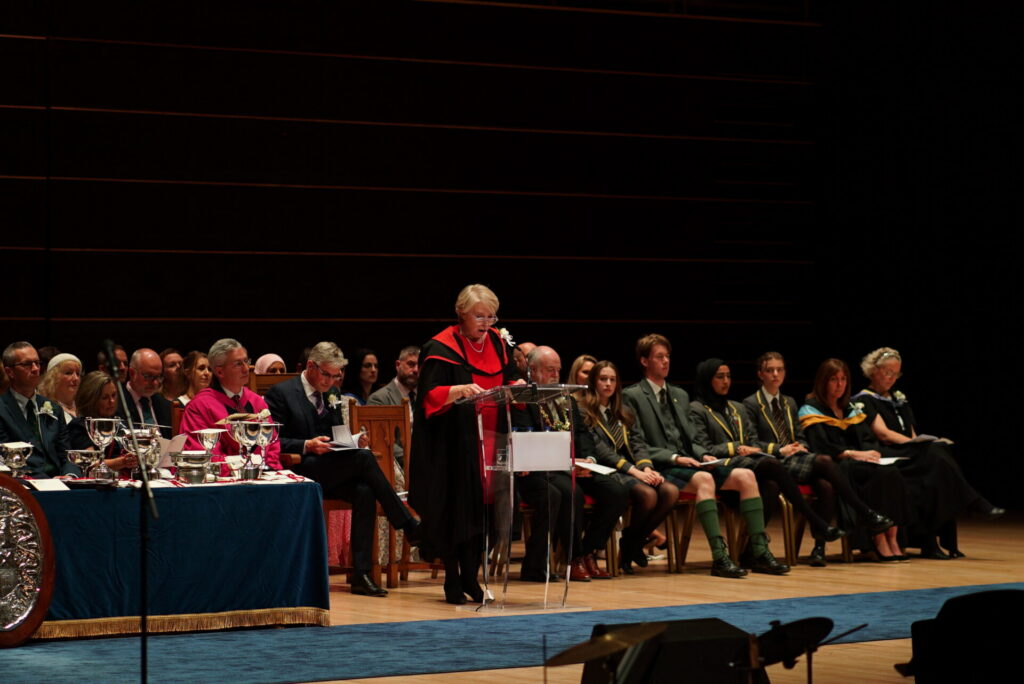
“I’ve sat at the Caird Hall concert almost every year I’ve been at this School, and I’ll be honest, I’ve very rarely made it through to the end without my emotions getting completely the better of me. Music does something nothing else does. It reaches somewhere that language alone simply can’t touch. I know that from my own life, it was singing, performing, standing completely exposed in front of an audience with nothing between you and them except your voice, that started to dissolve the shyness I’d carried all through childhood. The confidence you build through that kind of performance transfers into everything else. It’s not really a musical lesson, it’s a human one.
“So to be sitting in that hall in April and hear nearly forty former pupils from the classes of 2013 to 2025, performing alongside our current musicians, in a piece that Lionel (Steuart Fothringham, Director of Music) had composed for me… I’d been warned it would be emotional! That was quite the understatement! It brought together everything I love about this community: the continuity across generations, the quality and commitment of our staff, the confidence of young people who’ve been properly nurtured, and the extraordinary, enduring power of music to hold people together. I’ll carry that evening with me always.”
WHAT DEFINES HSD
What makes HSD such a special place?
“How long do we have?!
“It really does come down to the people, and the values they actually live by, not just the ones on the wall. There’s a combination of ambition and humility here that I find genuinely rare. Pupils are expected to work hard and aim high, but arrogance simply isn’t the culture. It’s confidence without condescension and seriousness without pomposity. There’s a real, instinctive care for other people that runs right through the community and is, I think, ingrained rather than taught.
“The HSD family – and I use that word deliberately, because it’s the right one – extends well beyond the current school roll. Former pupils stay connected to this place in a way that’s genuinely unusual. They come back as parents, as speakers, as volunteers, or simply as people who want to be part of what’s happening here. The Spring Concert, with former pupils returning to perform, was a vivid demonstration of that. That loyalty, that sense of belonging which outlasts the school years, it doesn’t happen by accident. It’s the result of a community that’s treated people well, over a very long time.
“I’m really happy about Irfan’s appointment as my successor, because I know he gets this. The DNA of this place is precious. You can and should keep improving things but you do it from within the character of the School, not by trying to replace it with something else.”
What will you miss most about the School?
“The people, without any question. The daily texture of being inside a community that’s alive and purposeful and occasionally completely unpredictable, because no two days in a school are ever the same, and that variety is one of the real gifts of this work.
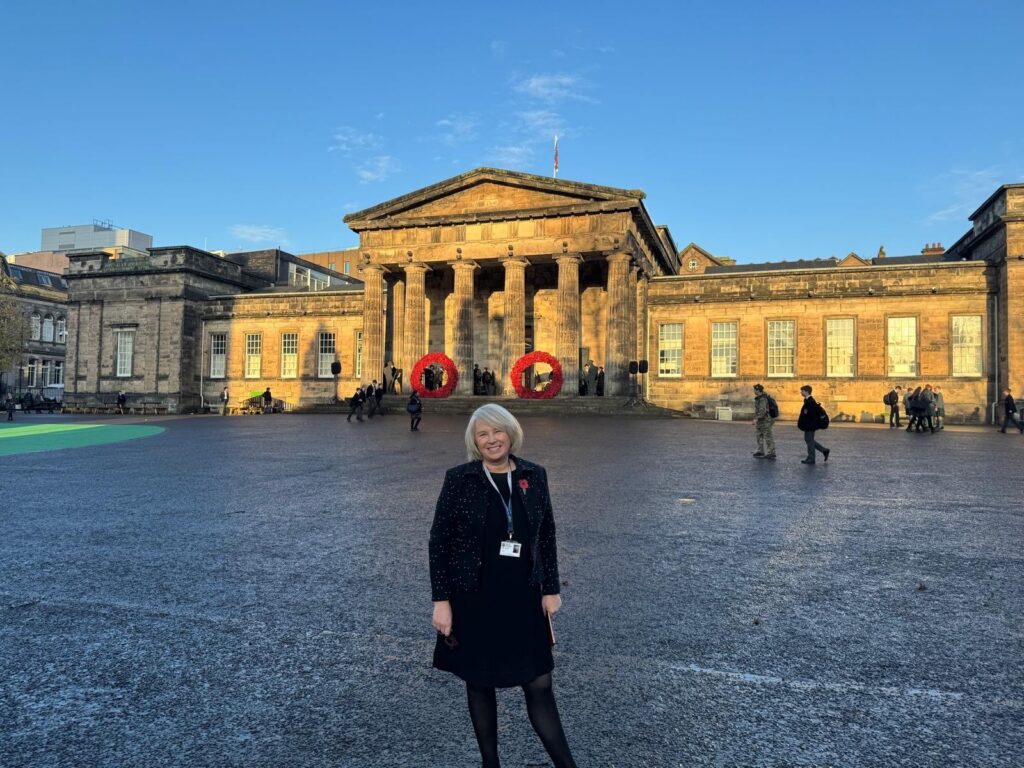
“I’ll miss the front-row seat. The drama productions, watching young people find a courage on stage that surprises even them. The music, always the music. Armistice, which moves me every year without fail, that act of collective remembrance in a world that isn’t always very good at it. The sporting fixtures. The corridor conversations that you couldn’t have planned and wouldn’t want to.
“And I’ll miss the ordinary days. Coffee with colleagues. Walking past a classroom and catching, through the window, a glimpse of something genuinely good happening. The sense of being completely embedded in something that matters. As Rector you feel that with a particular completeness and knowing it won’t be your daily reality anymore is honestly the hardest part of all of this.”
WHAT COMES NEXT
What’s next for Mrs Hudson?
“For the first time in thirty-six years, I don’t have a fixed plan and that’s quite deliberate.
“I’m going to allow myself the luxury of not having an immediate answer to that question. Some quiet. Some walking. Some mornings without an alarm. Some books that have been waiting very patiently on the shelf. More time with family.
“I know I’ll want to stay connected to education and to supporting young people in some way. There are conversations happening in Dundee, between schools, communities and businesses, about what properly joined-up thinking for young people in this city could look like, and I hope to be part of those. The High School of Dundee has been my home for thirty-six years. I’m not disappearing from it.
“And I do know I’ll stay connected to HSD. This school is in my bones.”